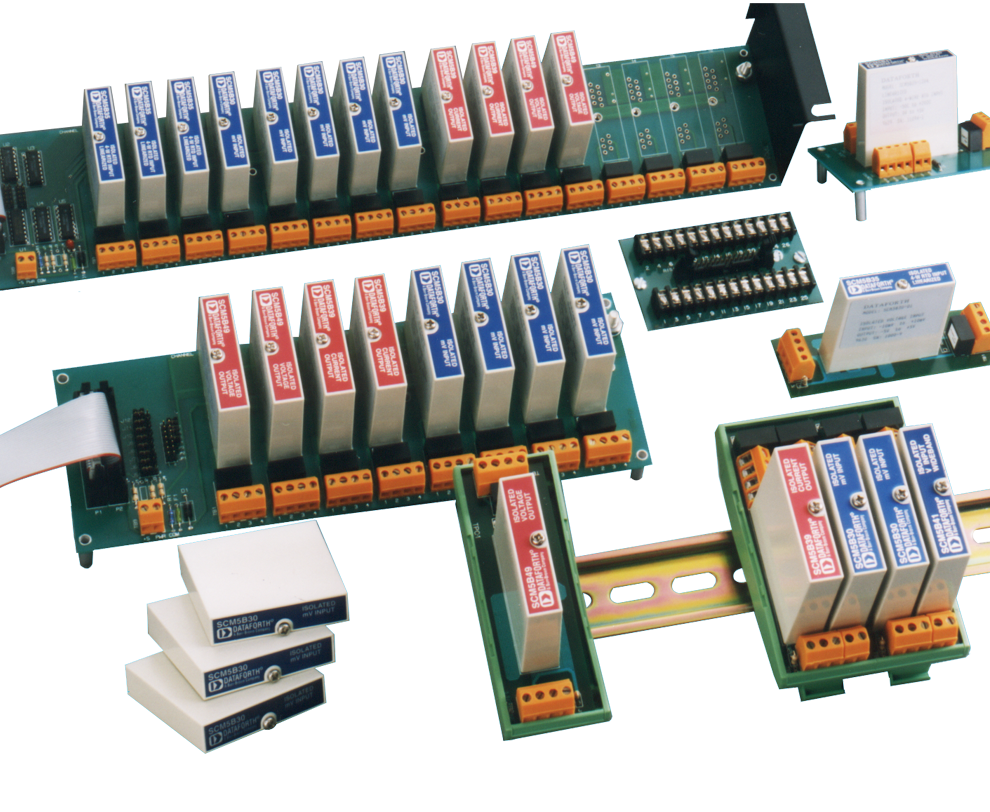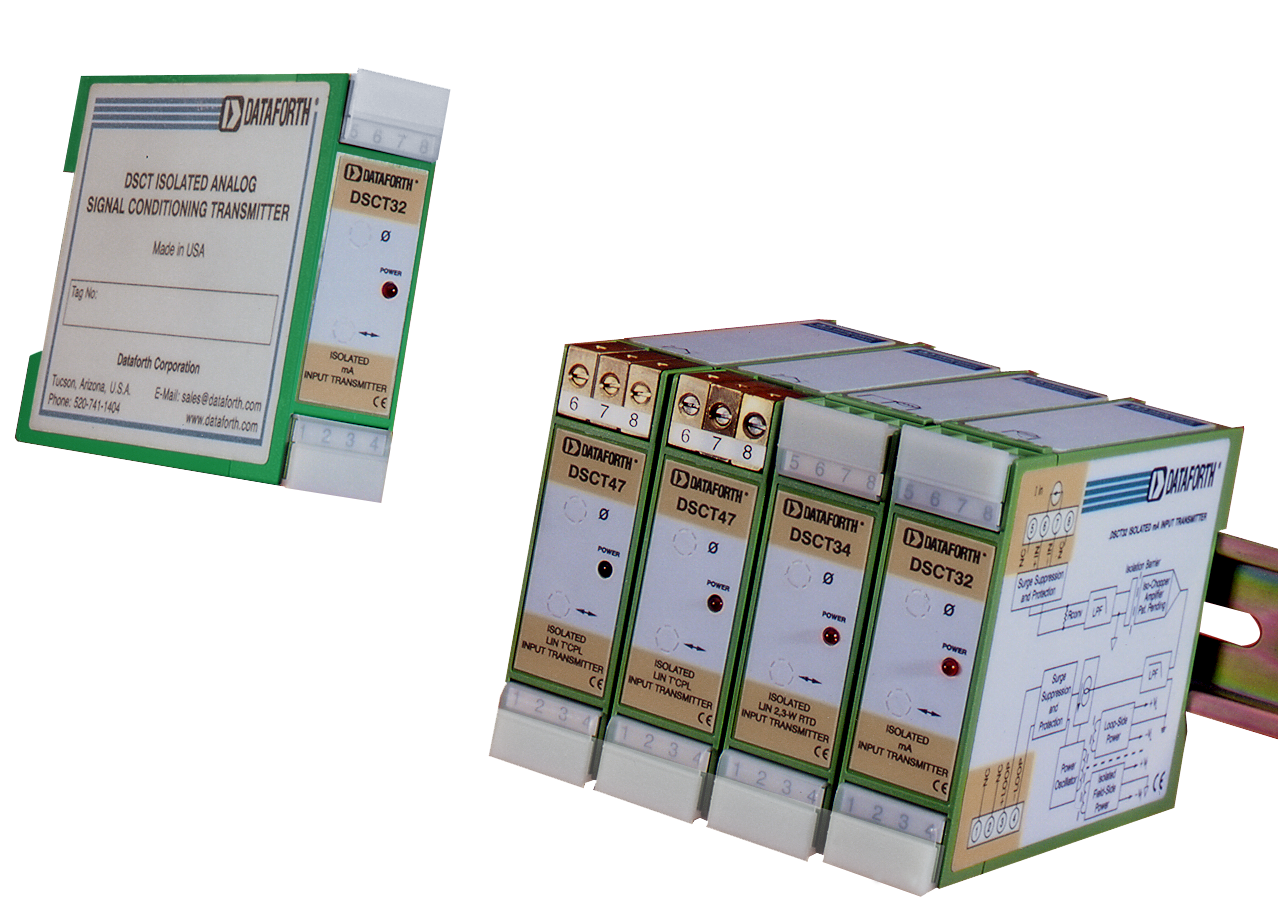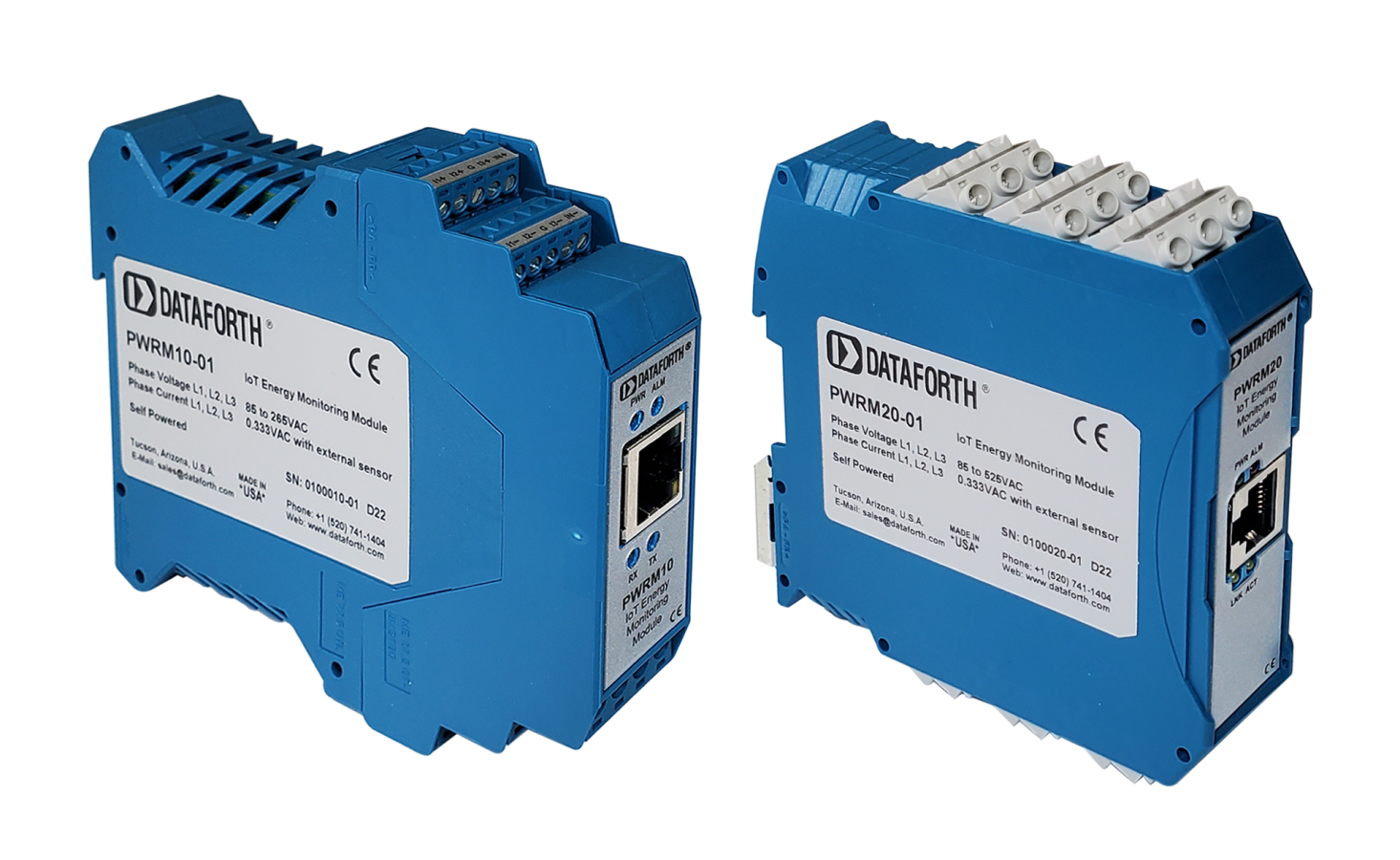
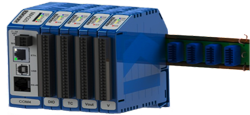
A Dataforth signal conditioning module with a multiple pole Low-pass 4 Hz bandwidth filter would reduce this resistor thermal noise to less than 3 nano-volts. The above expression illustrates that mean square thermal noise voltage is directly dependent on the temperature, the resistor value and bandwidth.
In practice, there is always some parasitic capacitance (C) across the leads of a resistor due to the printed circuit board or lead wire connections. For this situation, when the thermal noise in a resistor is shunted by a non-zero capacitance (C), the mean-square voltage value is given by k*T/C. For illustration purposes, consider a resistor at 100 degrees C. with a 1 pico-farad shunt capacitance. This model predicts a limit of approximately 71 micro-volts.
Temperature and resistor values can not always be minimized; however, using signal conditioning modules with small bandwidth multi-pole low-pass filters will ensure that external thermal resistor is essentially eliminated
All Dataforth signal conditioning modules are carefully tested for total internal module noise. The Dataforth signal conditioning module noise specification is a RMS representation and includes the contributions of all internal noise sources. Each Dataforth module is shipped with a test report that states total output noise (
Example Test Report ... 78kb PDF).
Dozens of Dataforth
eNewsletters and
Application Notes are available on this Website.
Remember, our Application Engineers can assist you with signal conditioner selection over the phone or via fax and email. Call us at our manufacturing facility in Tucson at 520-741-1404 (fax 520-741-0762) or Email us at
techinfo@dataforth.com.